


Across industries worldwide, companies are holding more industrial surplus equipment than they often realize. Warehouses, yards, and unused production spaces are filled with surplus industrial equipment, surplus industrial machinery, and used industrial equipment that no longer plays a role in daily operations.
This situation is not limited to one business type or region. Manufacturers, utilities, energy producers, and heavy industries all experience the same challenge: valuable equipment becomes surplus as operations change.
Understanding why industrial surplus exists and how businesses can review and manage surplus inventory more effectively is the first step toward protecting assets and recovering value.
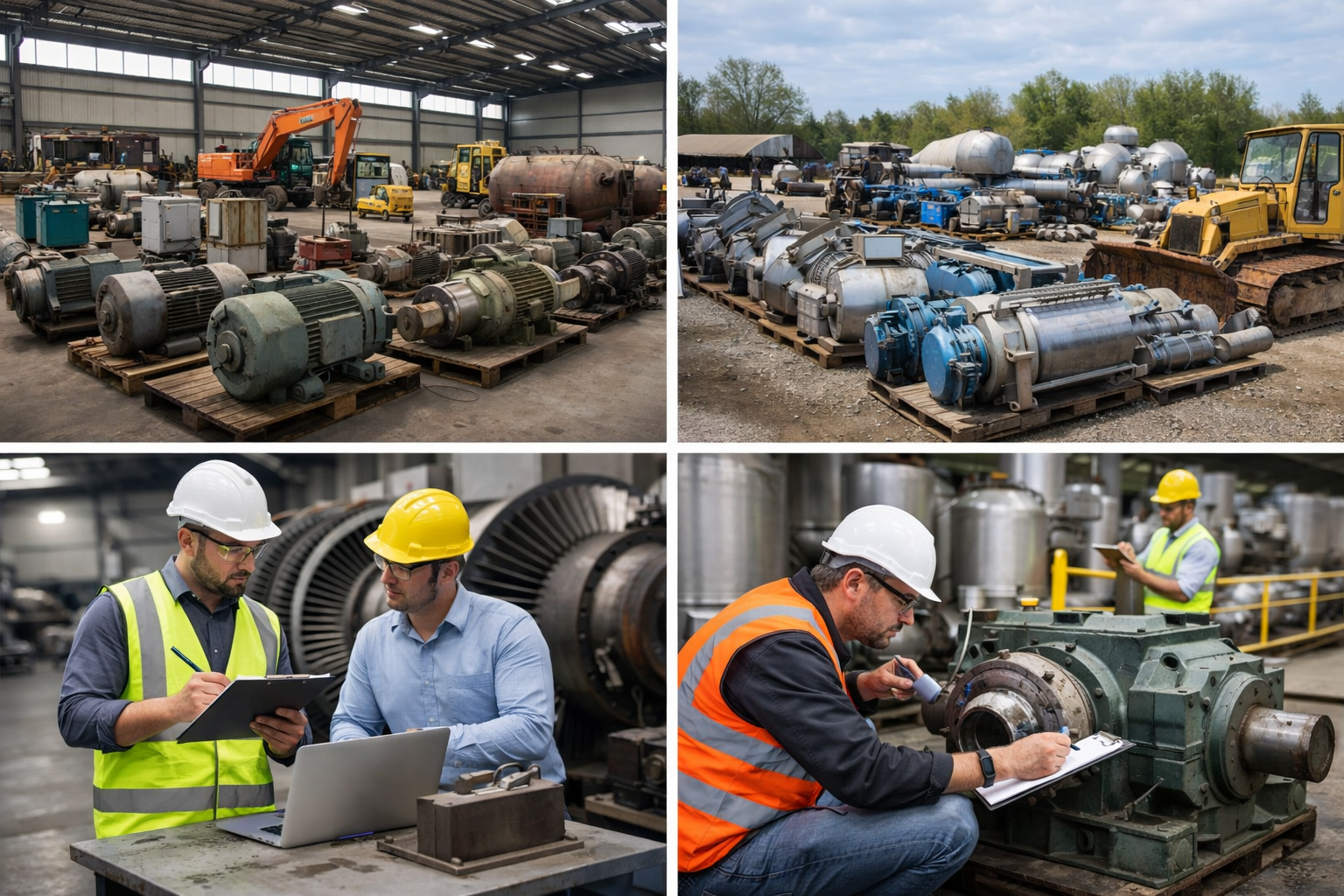
Large-scale industrial equipment is designed for durability. Many machines are engineered to operate reliably for decades. What changes more frequently is the business process surrounding that equipment.
Over time, manufacturers and other industries evolve due to:
When processes change, equipment may no longer fit operational requirements, even though it remains functional. At that point, machinery transitions from active use into industrial surplus.
This does not mean the equipment has lost value, only that its role has changed.
Surplus rarely appears overnight. It develops gradually as businesses adapt and grow.
Common scenarios include:
As surplus equipment accumulates, it often becomes part of a growing inventory of idle assets that remains untouched for years.
Once equipment is labeled surplus, many organizations struggle with what to do next.
Common challenges include:
As a result, surplus machinery sits in storage, tying up space, money, and internal resources. Over time, this unused stock becomes part of the background, noticed only when space runs out or audits occur.

Keeping surplus equipment may seem harmless, but it carries real costs for businesses.
These costs include:
Surplus equipment is still an asset on paper, but without a clear plan, it becomes a passive drain on business efficiency.
One of the most important steps in managing industrial surplus is understanding that not all equipment falls into the same category.
Surplus equipment generally breaks down into several types:
Some categories have strong secondary markets. Others are more limited. Conducting a structured review allows businesses to identify which assets may be suitable for sale, which should be retired, and which can be redeployed internally.
Many sellers assume surplus equipment has little resale value. This assumption is often incorrect.
Buyers in the global industrial market continue to search for used industrial equipment to:
When surplus equipment is evaluated early, before it deteriorates or is dismantled, it often attracts more interest from buyers and yields better deals.
An effective surplus review does not require immediate action. It requires clarity.
A practical review process often includes:
This step-by-step approach enables businesses to make informed decisions rather than reacting under time pressure.
Time plays a critical role in surplus equipment outcomes.
Surplus that is reviewed early:
Surplus that sits untouched for years:
The sooner a business understands its surplus position, the more control it maintains over the process.
Most organizations begin by asking the same questions:
From there, businesses can decide whether to:
Reaching this stage brings clarity and helps businesses proceed with confidence.
Industrial surplus equipment exists across the world. In every region, buyers and sellers interact daily to move machinery, products, and assets from one operation to another.
For many clients, surplus equipment represents:
Handled thoughtfully, surplus becomes an opportunity rather than a burden.
The key to managing industrial surplus equipment is not rushing to buy or sell. It is understanding the assets, the categories they fall into, and the options available.
With a clear review, businesses can:
Industrial surplus equipment includes large-scale machinery, systems, and components that are no longer needed for current operations but remain functional or recoverable. This often includes surplus industrial machinery removed during shutdowns, upgrades, process changes, or project cancellations. Equipment typically qualifies as surplus when it no longer fits operational requirements, not because it has failed.
Not always. Used industrial equipment refers broadly to machinery that has been previously operated. Industrial surplus equipment may be unused, lightly used, or fully operational but in excess of requirements. In many cases, surplus equipment has significant remaining service life but is no longer aligned with a facility’s business process.
Surplus equipment often remains in inventory due to unclear ownership, lack of time to conduct a formal review, uncertainty about resale options, or assumptions that the equipment has little value. In many industries, operational priorities take precedence, causing surplus assets to be deferred rather than evaluated.
The decision typically starts with a structured review of surplus inventory. Businesses assess equipment categories, condition, completeness, and relevance to other industries or manufacturers. Some assets may be suitable for sale, while others may be redeployed internally or retired. Early review preserves the most options and helps avoid rushed decisions later.
The first step is understanding what surplus equipment exists and where it is located. This usually involves identifying idle machinery, grouping assets by category, and reviewing basic information such as age, condition, and original use. From there, businesses can determine whether to hold, sell, or request a free quote to better understand potential market value.
Every day your equipment sits idle, it loses value. Recover maximum value before it’s too late!